Discover the traditional dishes and food experiences of Spain’s capital
Madrid is not only known for its historic landmarks and lively neighborhoods, but also for its vibrant food culture. The Spanish capital offers a wide variety of traditional dishes, local specialties, and modern culinary experiences that reflect the diversity of Spanish cuisine.
Food in Madrid is more than just a way to eat, it’s a social activity. Locals often gather with friends or family to share meals, try different dishes, and enjoy long conversations at the table. For travelers, discovering Madrid’s food culture is one of the most enjoyable parts of visiting the city.
Whether you are exploring traditional tapas bars, visiting local markets, or dining in classic restaurants, Madrid offers countless opportunities to experience authentic Spanish flavors. This guide introduces some of the most popular foods to try in Madrid and where visitors can experience them.
Tapas: the heart of Madrid’s food culture
A social way of eating
Tapas are one of the most famous aspects of Spanish cuisine. These small dishes are designed to be shared, allowing people to try several different foods in a single meal.
In Madrid, tapas are often enjoyed while moving from one bar to another, a tradition sometimes referred to as a “tapas crawl.” Each bar usually has its own specialty, making it fun to explore different places throughout the evening.
For travelers visiting the city with friends or in groups, tapas are a perfect dining option because everyone can share dishes and taste a variety of flavors together.
Popular tapas to try
Some of the most common tapas you will find in Madrid include Spanish tortilla, croquettes, and patatas bravas.
Spanish tortilla is a thick omelet made with eggs and potatoes. It is simple but delicious and can be found in almost every tapas bar.
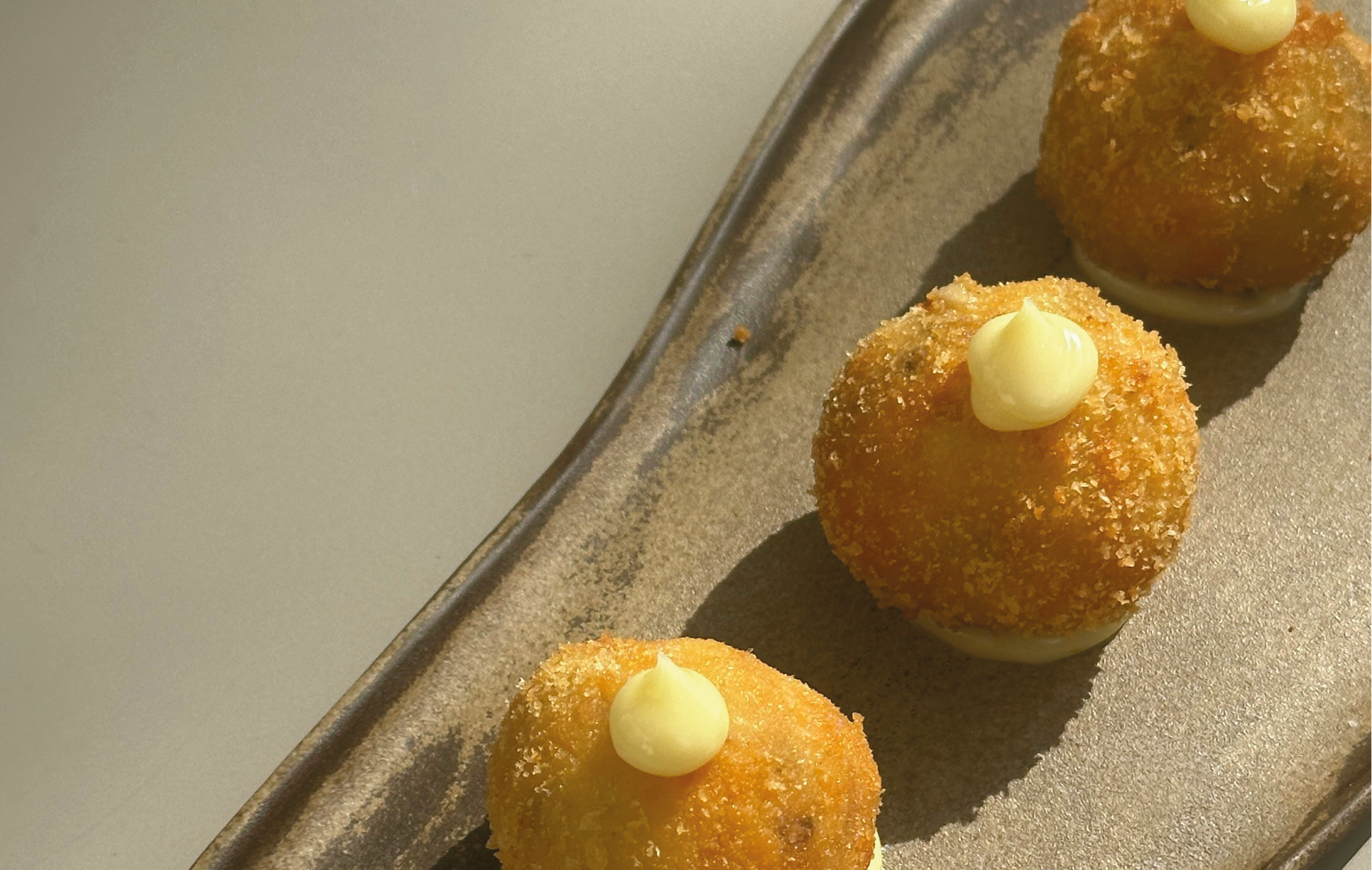
Croquettes are small fried bites filled with ingredients such as ham, chicken, or cheese. Their creamy texture makes them a favorite snack.
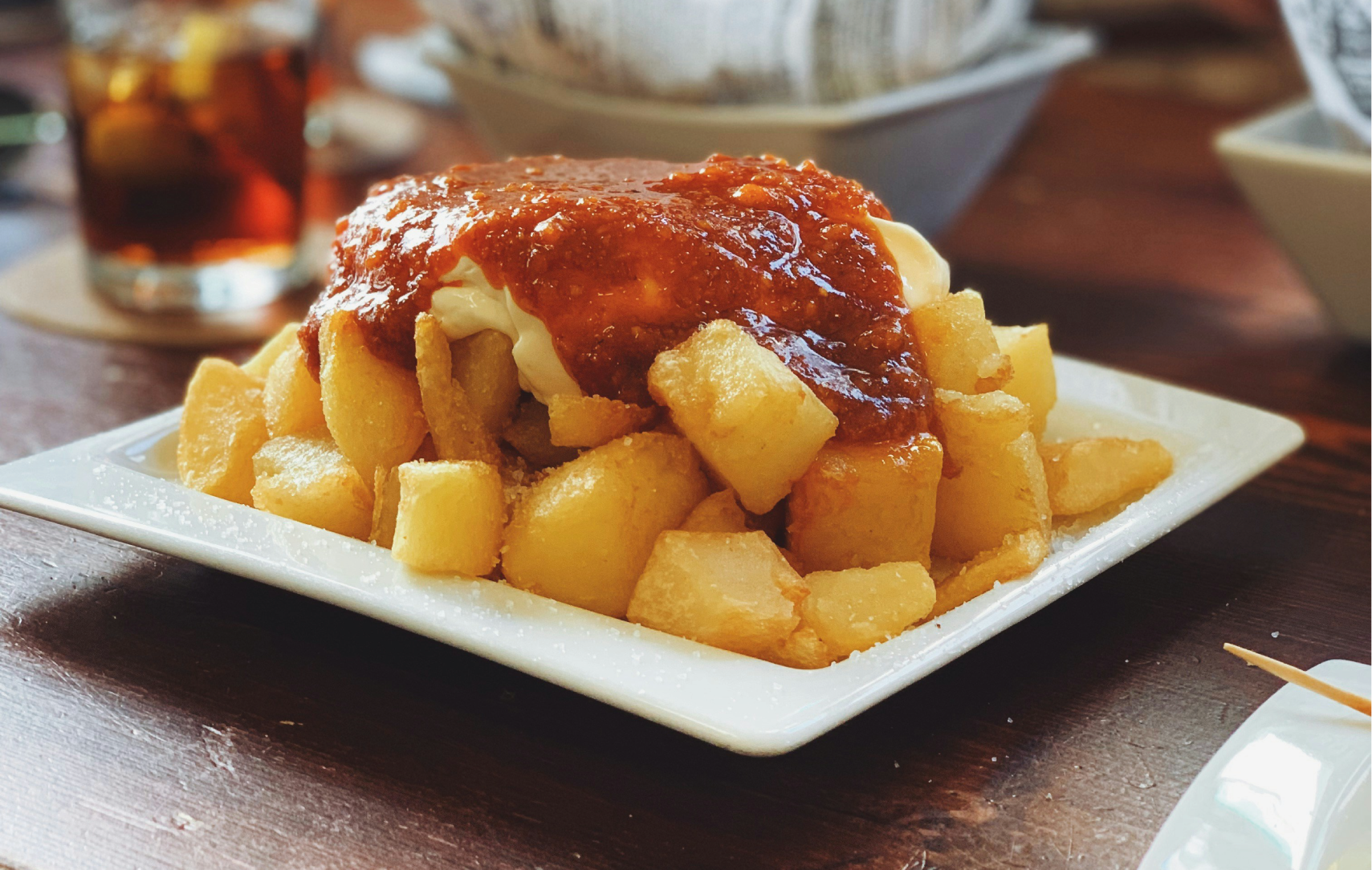
Patatas bravas consist of fried potato cubes served with a slightly spicy sauce. This dish is one of the most popular tapas across Spain.
Bocadillo de Calamares: a Madrid classic
A simple but famous sandwich
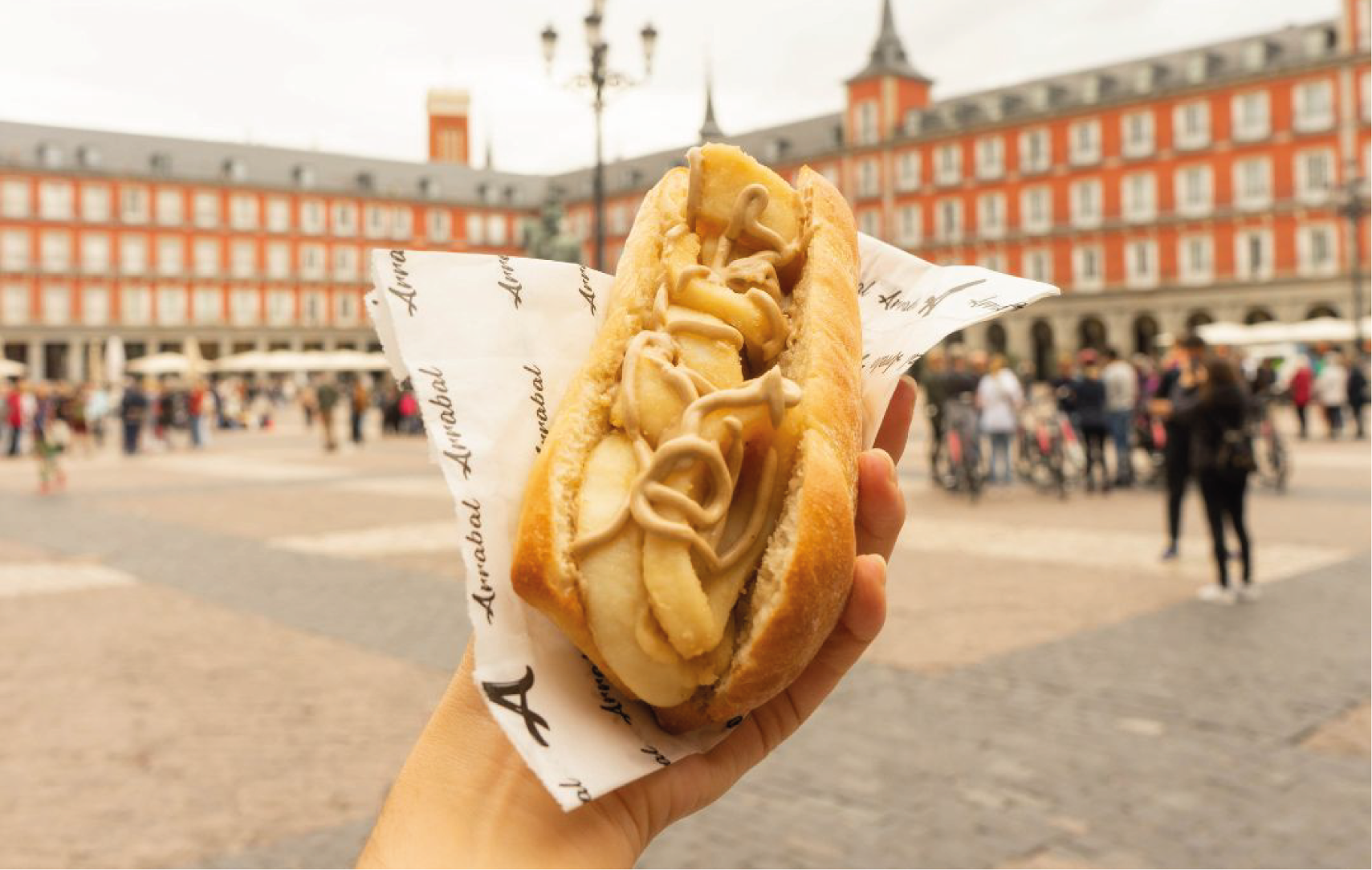
One of the most traditional foods associated with Madrid is the bocadillo de calamares, a sandwich filled with fried calamari rings.
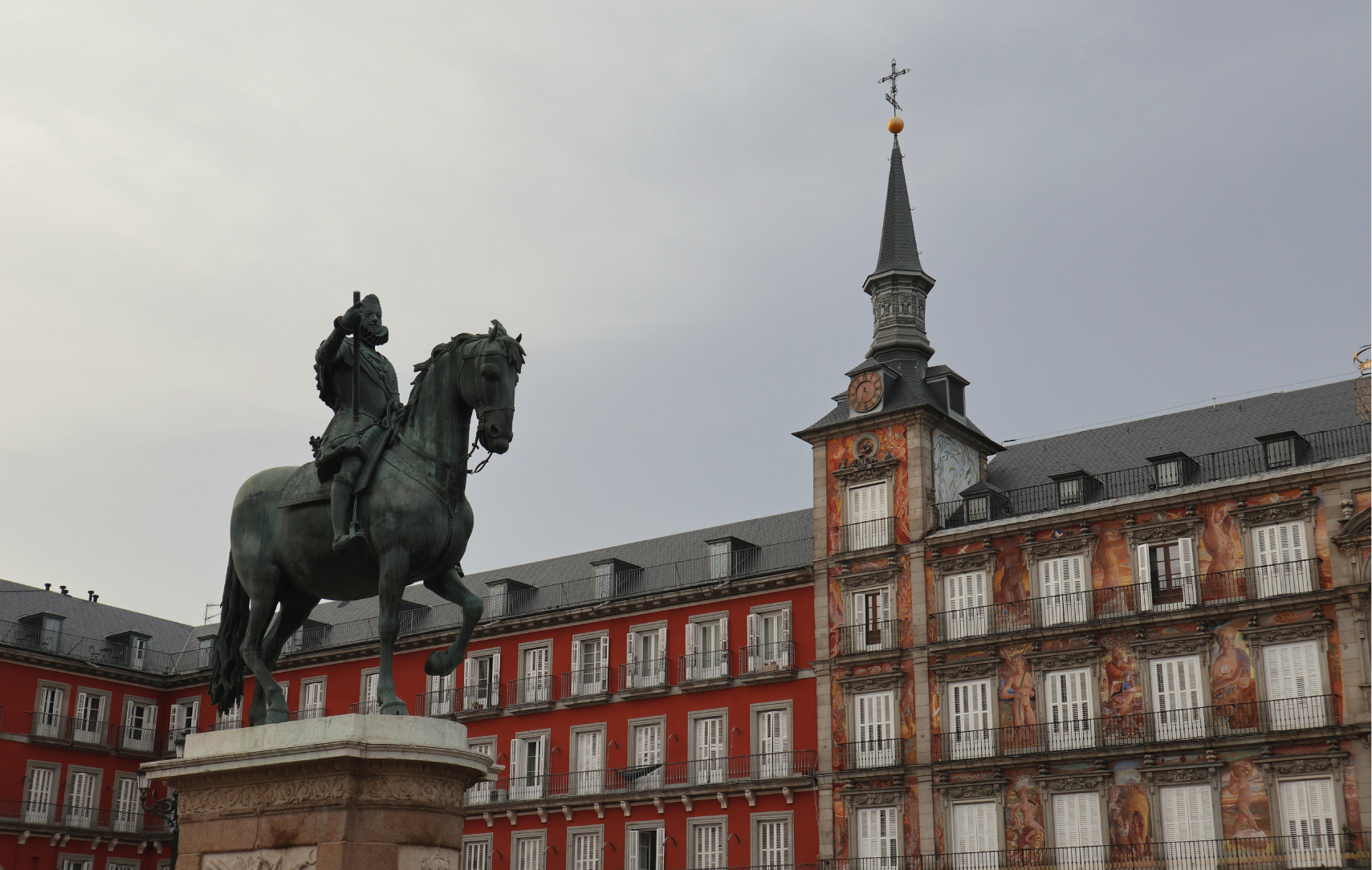
Although it may sound simple, this dish has become a local icon. The sandwich is typically served on crusty bread and often enjoyed with a drink in one of the bars around Plaza Mayor.
Many visitors are surprised to discover that this seafood sandwich is one of Madrid’s most famous street foods.
Where to try it
The area around Plaza Mayor is known for having several historic bars that specialize in calamari sandwiches. These places are often busy with both locals and tourists who come to try this classic snack.
Traditional Madrid dishes
Cocido Madrileño
One of the most traditional dishes from Madrid is cocido madrileño, a hearty stew made with chickpeas, vegetables, meat, and sausages.
This dish is typically served in several stages. First comes the broth, followed by the chickpeas and vegetables, and finally the meat. Because it is quite filling, it is usually eaten as a long lunch rather than a quick meal.
Cocido madrileño is especially popular during the colder months, when its rich flavors make it a comforting dish.
Callos a la Madrileña
Another traditional recipe is callos a la madrileña, a stew made with tripe, chorizo, and spices. This dish has strong flavors and reflects Madrid’s traditional cuisine.
While it may not be familiar to all visitors, it remains a classic part of local gastronomy and can be found in traditional restaurants across the city.
Madrid’s food markets
Mercado de San Miguel
One of the most famous food markets in Madrid is Mercado de San Miguel, located near Plaza Mayor. The historic iron structure houses numerous stalls offering a wide variety of Spanish foods.
Visitors can try seafood, tapas, cheeses, desserts, and wines while walking through the market. The lively atmosphere makes it a popular stop for travelers exploring the city center.
Food markets are particularly convenient for groups because everyone can choose different dishes while still sharing the experience together.
Other local markets
Madrid also has many neighborhood markets where locals shop for fresh ingredients and prepared foods. Some markets include small restaurants and food stalls that offer authentic local dishes.
Exploring these markets provides a glimpse into everyday life in Madrid and introduces visitors to regional products from across Spain.
Churros and chocolate: a sweet tradition
A classic Spanish treat
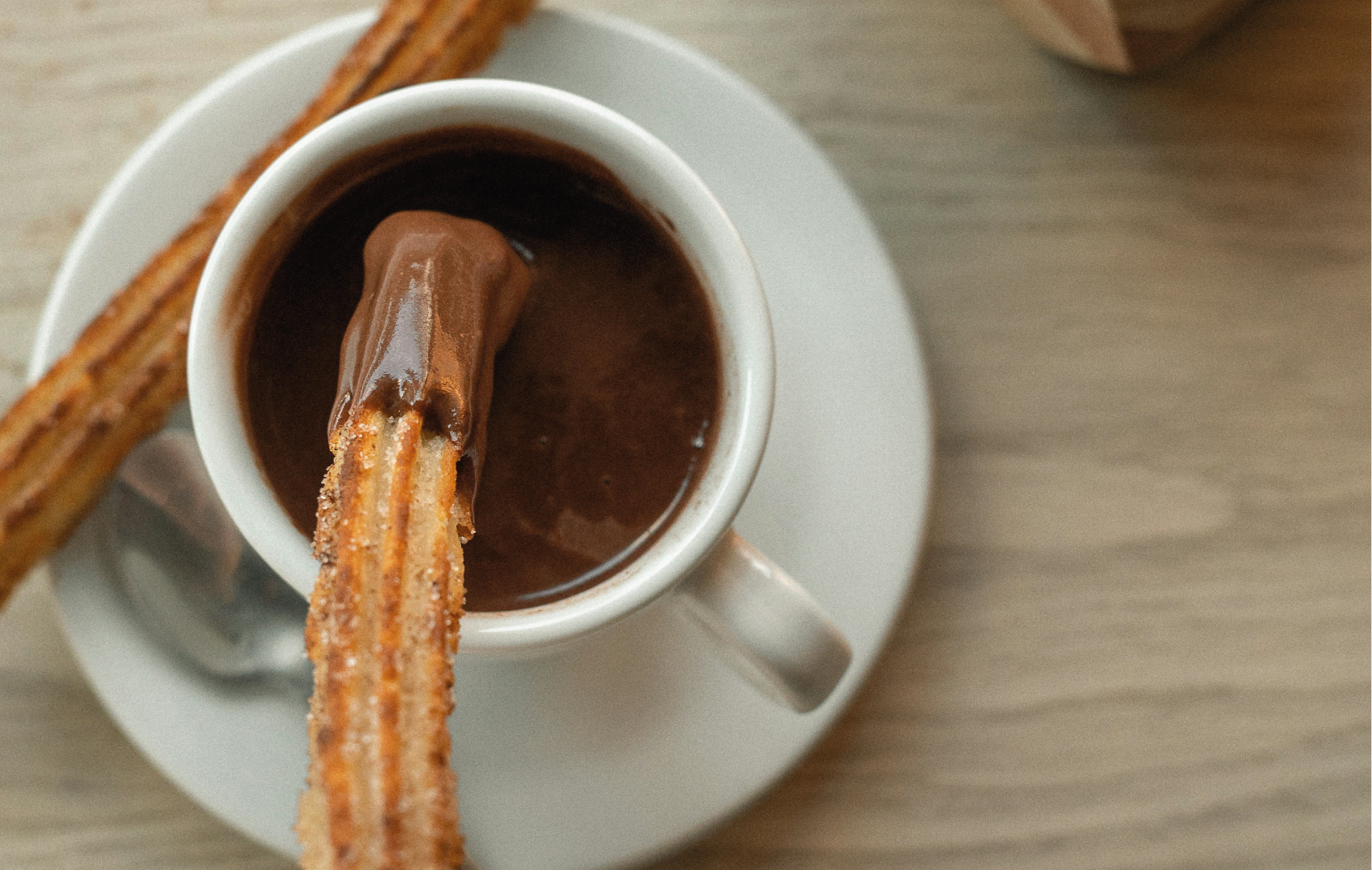
No visit to Madrid is complete without trying churros con chocolate. Churros are fried dough pastries that are served with a thick cup of hot chocolate for dipping.
This sweet treat is popular both as a breakfast and as a late-night snack after an evening out.
Traditional cafés
Madrid is home to several historic cafés that specialize in churros and chocolate. These places have been serving the same recipes for decades and remain popular with both locals and visitors. The most famous one is Chocolatería San Ginés.
Sharing churros is another example of how food in Madrid often brings people together around the table.
Dining culture in Madrid
Late meals and relaxed atmosphere
One thing many visitors notice when arriving in Madrid is that meal times are later than in many other countries.
Lunch usually takes place between 2:00 and 4:00 in the afternoon, while dinner often starts after 9:00 in the evening. Restaurants and bars remain open late, and the city’s nightlife continues well into the night.
Sharing food with friends
Eating in Madrid is often a social experience. Meals are rarely rushed, and it is common for people to spend several hours enjoying food and conversation.
For travelers visiting the city with friends or groups, sharing dishes and exploring different restaurants can become one of the most memorable parts of the trip.
Experiencing Madrid through its food
-
Food is an essential part of Madrid’s identity. From traditional tapas bars to lively markets and historic cafés, the city offers countless ways to experience Spanish cuisine.
- Trying local dishes allows visitors to understand the culture of Madrid and enjoy the city in a more authentic way. Whether tasting tapas in a busy bar, sharing churros with friends, or exploring a food market, every meal becomes an opportunity to connect with the city.
- For first-time visitors, discovering Madrid’s food scene is not just about eating, it's about experiencing one of the most enjoyable traditions of Spanish life.