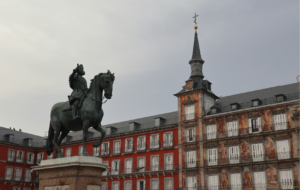
A practical guide to moving around Spain’s capital
Madrid is considered one of the easiest European cities to navigate. The city has a really efficient public transport system, a compact historic center, and many attractions located within walking distance of each other. Whether you are visiting for a few days or staying for a little longer, getting around Madrid is generally simple and convenient
For travelers arriving for the first time, it’s really important to understand how the metro, buses, and walking routes work to help you save time and explore the city more comfortably. This guide offers the main transportation options in Madrid and explains practical tips to help visitors move around the city without worry.
Exploring Madrid on foot
A very walkable city center
One of the best ways to experience Madrid is to simply walk. The historic center is relatively compact, so many of the city’s most famous landmarks are located closely. It’s easy for visitors to walk between places like Puerta del Sol, Plaza Mayor, the Royal Palace, and Gran Vía.
Also, walking through the city is also a great way to discoverhidden streets, local cafés, and small shops that might be missed when using transport. Madrid’s streets are full of life throughout the day, and wandering through different neighborhoods often becomes one of the highlights of a visit.
Walking between major attractions
Many popular attractions are surprisingly close to each other. For example, visitors can walk from the Royal Palace to Plaza Mayor in less than ten minutes. From there, it is only a short distance to Puerta del Sol.
Another pleasant walk connects the city center to the famous museums and Retiro Park. The wide boulevard known as Paseo del Prado links several important cultural sites, including the Prado Museum, the Reina Sofía Museum, and the Thyssen-Bornemisza Museum.
For people visiting Madrid with friends or larger groups, walking is often the easiest way to explore the central districts while enjoying the city together.
Using the Madrid metro
One of Europe’s best metro systems
The Madrid Metro is one of the largest and most efficient underground transport systems in Europe. It has more than a dozen lines connecting most parts of the city, wich allows visitors to travel quickly between neighborhoods and major attractions.
Stations are easy to find throughout the city, and trains run frequently during the day. Most metro stations also include clear maps and signs in Spanish and English, making it easier for international travelers to navigate the system.
Buying metro tickets
Visitors can purchase tickets from machines located in every metro station. These machines usually offer several language options and accept both cards and cash.
Travelers staying in Madrid for several days often choose a multi-journey ticket or a transport card that allows multiple trips. This can be more convenient and cheaper than buying a new ticket for each journey, depending in how often they will use the public transport.
The Madrid Metro fares depend on the type of ticket and the distance travelled. To use the metro, passengers usually need a Multi Card, which is a rechargeable transport card that costs €2.50 and can be used to load different tickets.
A single ticket within Zone A (the central area of Madrid) costs between €1.50 and €2.00, depending on the number of stations travelled. Trips of up to five stations cost €1.50, and the price increases slightly as the distance becomes longer, reaching a maximum of €2.00 for longer journeys.
Another common option is the 10-trip ticket (Metrobús). This ticket allows ten journeys and can be used on Metro Zone A, EMT city buses, and Metro Ligero line ML1. It costs €7.30, making it cheaper than buying ten individual tickets.
Metro tips for visitors
- The metro is usually busiest during weekday rush hours, especially in the early morning and late afternoon. If possible, visiting major attractions outside these times can make travel more comfortable.
- The system also connects the city center with many neighborhoods where visitors may stay, making it a convenient option for returning to accommodation after a long day of sightseeing.
Madrid’s bus network
Una alternativa útil al metro
Madrid’s bus system is another reliable way to move around the city. Buses operate across a wide network and reach areas that may not be directly served by the metro.
One advantage of using buses is that travelers can see more of the city while moving between destinations. Many bus routes pass through central streets and major landmarks.
A single bus ticket costs €1.50. This ticket can be bought directly from the bus driver when boarding, and it allows passengers to travel on one bus journey within the city.
Another common option is the 10-trip ticket (Metrobús). This ticket costs €7.30 and can be used not only on EMT buses but also on the Metro in Zone A. It is usually loaded onto the rechargeable Multi Card, which allows passengers to store several tickets and use them when needed. This option is cheaper than buying ten individual tickets.
Night buses
Madrid also offers night bus services, commonly known as “búhos.” These buses run after the metro closes and provide transportation during the late-night hours.
This can be particularly useful for visitors enjoying Madrid’s nightlife, which often continues well past midnight.
Getting from the airport to the city center
Metro from the airport
Madrid-Barajas Airport is located about 12 kilometers from the city center and is well connected by public transport. One of the easiest ways to reach central Madrid is by metro.
Metro Line 8 connects the airport with the Nuevos Ministerios station, where travelers can transfer to other metro lines that lead to different parts of the city.
If passengers travel to or from Madrid Airport by metro, there is an additional airport supplement of €3.00, which must be added to the price of the regular ticket.
Airport Express bus
Another convenient option is the Airport Express Bus, which runs between the airport and central locations such as Atocha Station and Plaza de Cibeles. This bus operates 24 hours a day and is a practical option for travelers arriving late at night.
A single ticket for the Airport Express Bus costs €5.00. The ticket can be bought directly from the bus driver, and payment is usually made in cash or by card. Unlike other buses in Madrid, the Metrobús ticket and regular transport passes are not valid on this service.
Taxis and ride services
Taxis are also widely available at the airport. There is usually a fixed fare for trips between the airport and the city center, which makes pricing straightforward for visitors.
Groups arriving with luggage sometimes prefer taxis or ride services because they allow everyone to travel together directly to their accommodation.
Practical transport tips for travelers
Plan your routes in advance
Using map applications or transport apps can help visitors plan routes and estimate travel times. Many apps provide real-time information about metro lines and buses.
Stay near public transport
Choosing accommodation close to a metro station can make exploring Madrid much easier. Many travelers prefer staying in central areas where they can walk to major attractions and still access public transport easily.
Consider walking for short distances
Even though the metro is efficient, walking short distances is often faster in the city center. Streets are lively and filled with interesting places, making walking a pleasant part of the travel experience.
Discovering Madrid with Ease
- Getting around Madrid is generally straightforward thanks to the city’s excellent infrastructure and compact layout.
- Visitors can easily combine walking with public transport to explore different neighborhoods and attractions.
- Whether traveling by metro, bus, or simply on foot, moving around Madrid becomes part of the experience of discovering the city. With a little planning, visitors can spend less time worrying about transport and more time enjoying everything the Spanish capital has to offer.